
Heritage of Pakistan
Home
Discover
Explore
Map
  • Forts
  • Temples
  • Churches
  • Mountains & Valleys
  • National Parks
  • Mosques
  • Tombs
  • Shrines
  • Lakes
  • Gurdwara
  • Archaeological sites
  • Palaces

Explore Forts

Discover stunning fortifications of Pakistan

Discover more
Explore Forts
Heritage of Pakistan

Near You

Nearby You

Featured

Editor's Picks

Top Rated by Travellers

Most loved

Hidden Gems

Beyond the Tourist Trail

By Region

Explore by region

Architecture

Architectural Wonders

Plan Your Visit

Trip Ideas

Photos

Discover through Photos

Browse the archive →

Location

Find Heritage on the Map

Open the map →

Heritage of Pakistan

Discover 5,000+ years of history

Save sites, plan trips, and track your visits across Pakistan.

Discover | Explore | Preserve
Discover

Discover

Dashboard

Heritage of Pakistan

Please rotate to portrait

Explore
Explore
Map
Loading sites…
Loading…
Bhir Mound  Taxila

Bhir Mound Taxila

GPS
Back to Article
Back to ArticleTaxila, Punjab
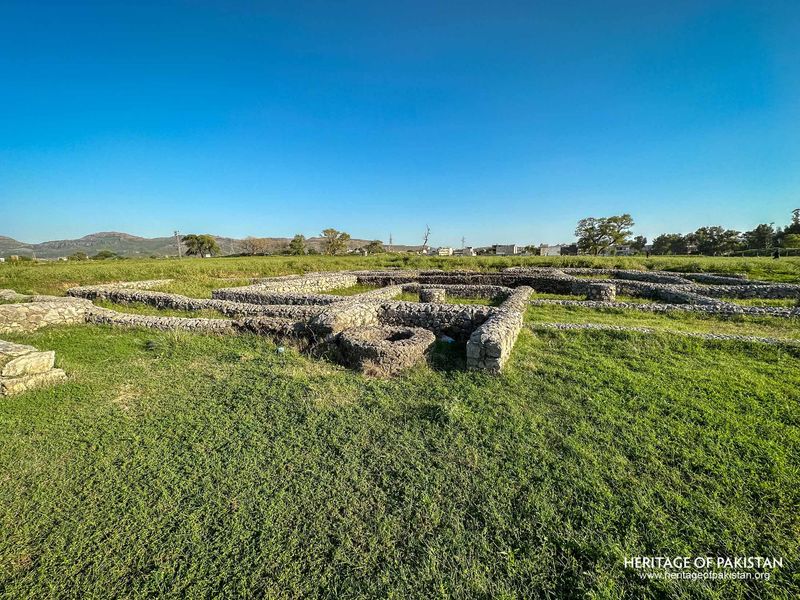
Bhir Mound in Taxila is one of the earliest urban settlements of the Gandhara civilization, dating back to the 6th century BCE. Believed to have been founded by the Achaemenids and later expanded by the Mauryans, it reveals ancient city planning, trade links, and the cultural evolution of early South Asia.
ArchitectureArchaeological SitesUrban settlementAncient City600 to 330 BCE | Achaemenid Persian Era 185 to 50 BCE | Indo-Greeks & Indo-Scythian Era Stone MasonryStone & Rock ArchitectureUrban Planning 322 – 185 BCE | Maurayan Empire Era
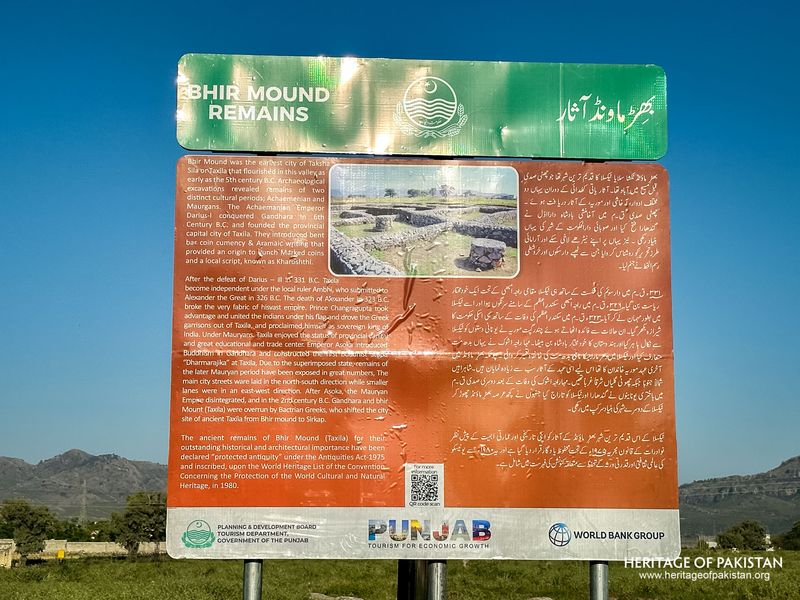
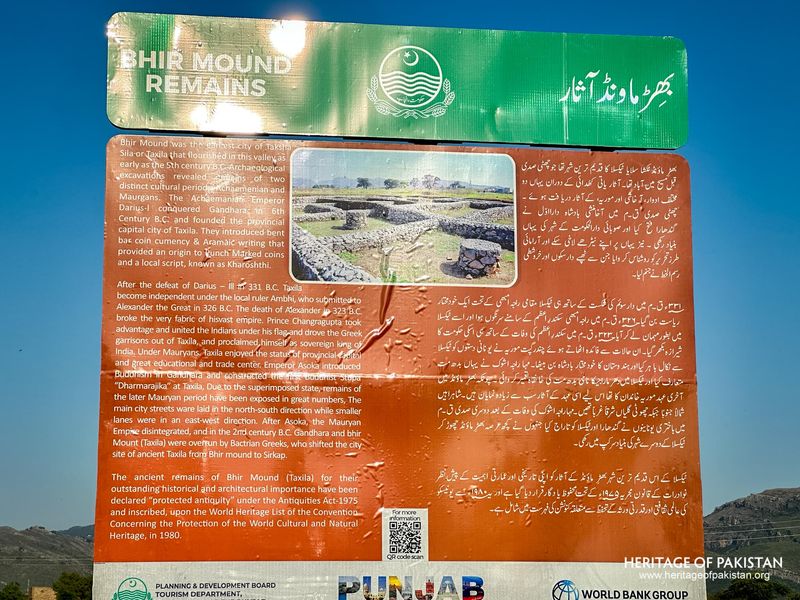
Interpretation panel marks Bhir Mound, earliest urban settlement in Taxila Valley.
Site marker showcases Bhir Mound's stratified cultural layers spanning six centuries.
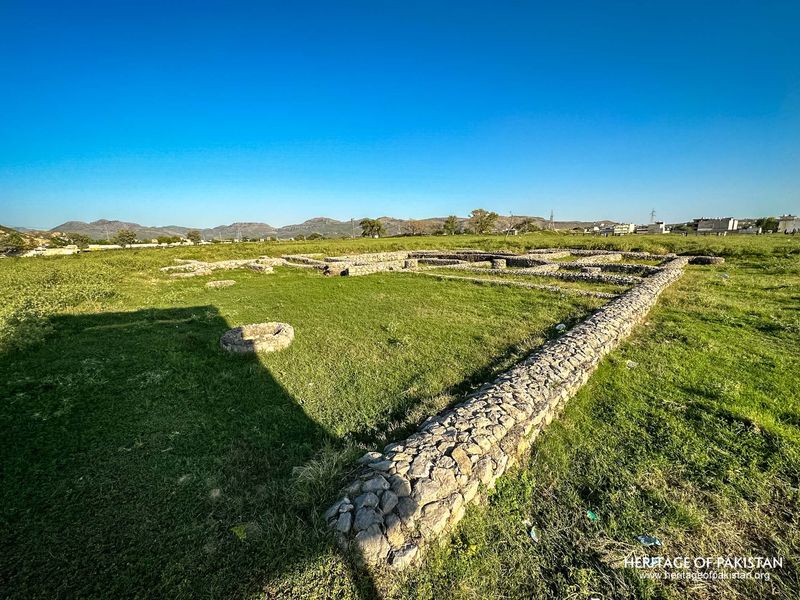
At Bhir Mound, visible stone structures mark successive settlements across centuries.
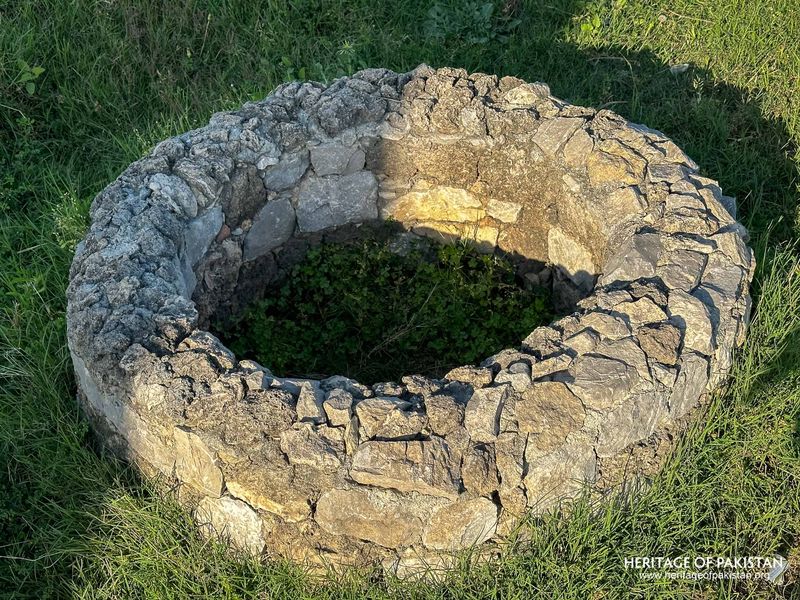
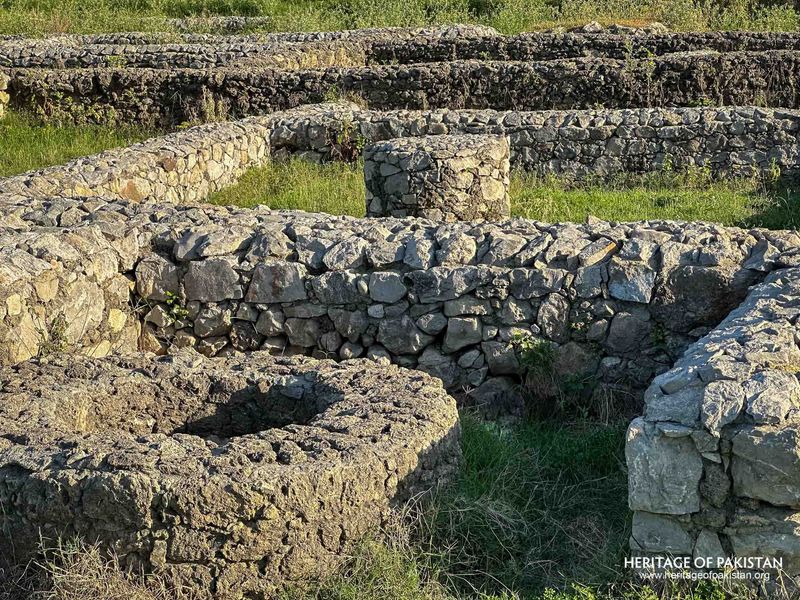
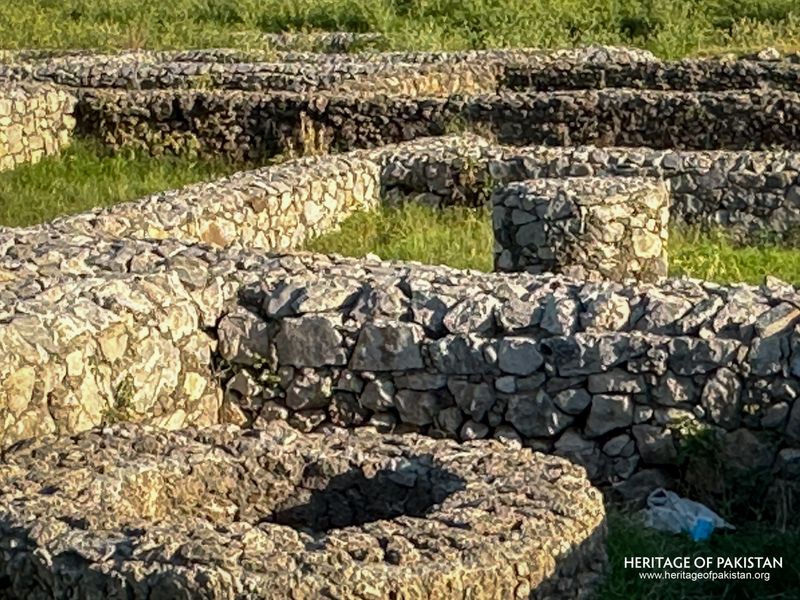
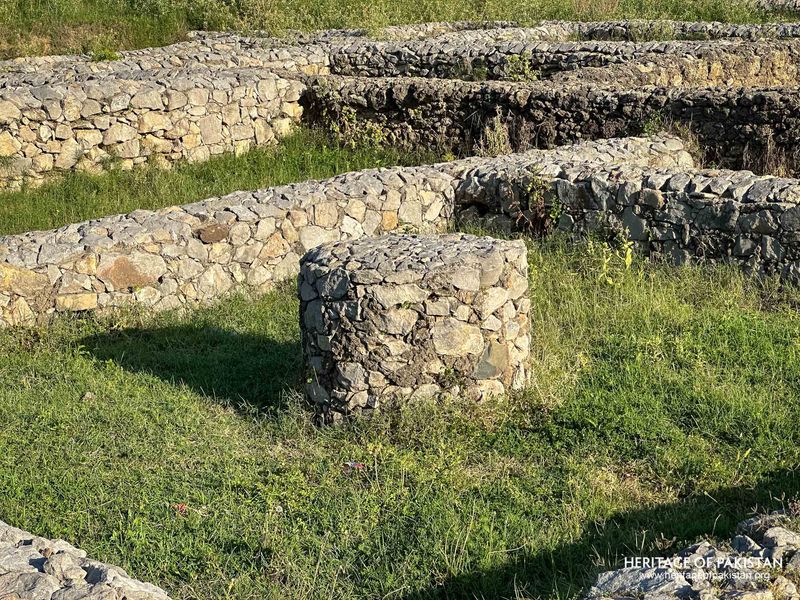
Circular stone foundation reveals construction techniques of ancient Bhir Mound settlement.
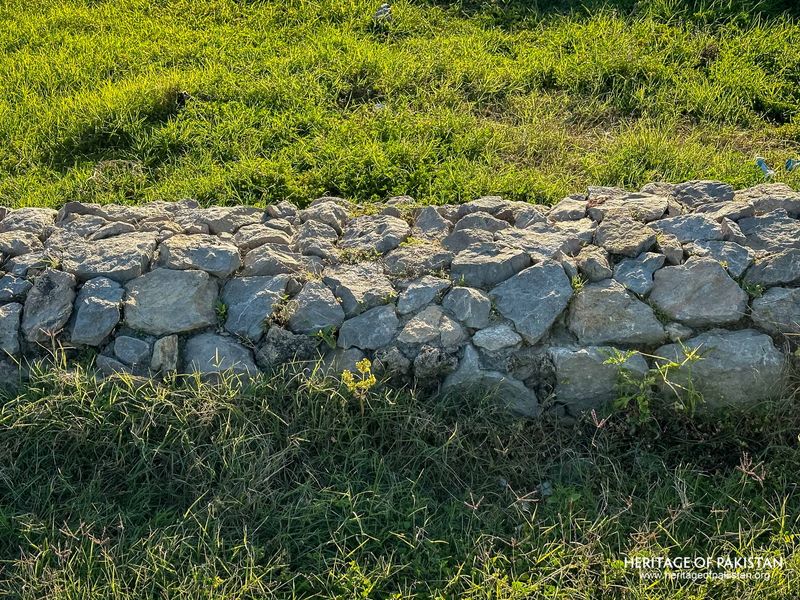
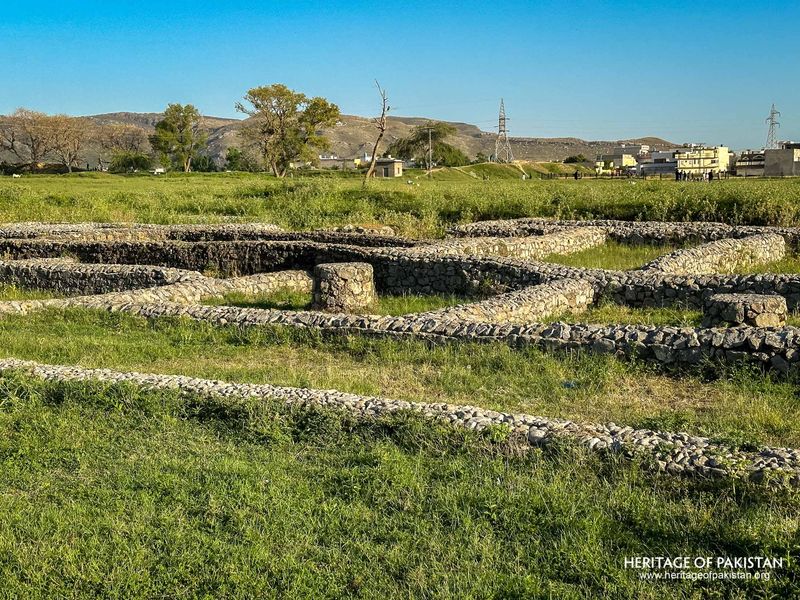
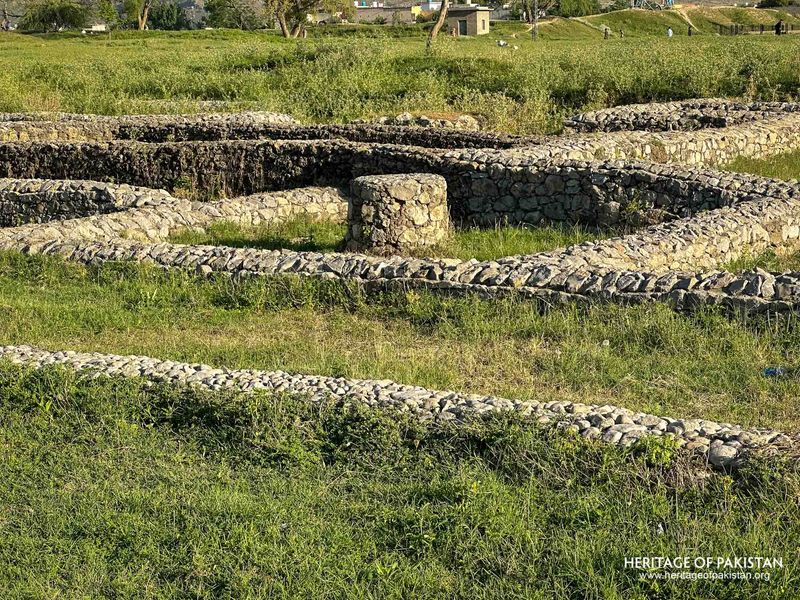
Stone wall foundations mark urban layout of ancient Taxila's first city.
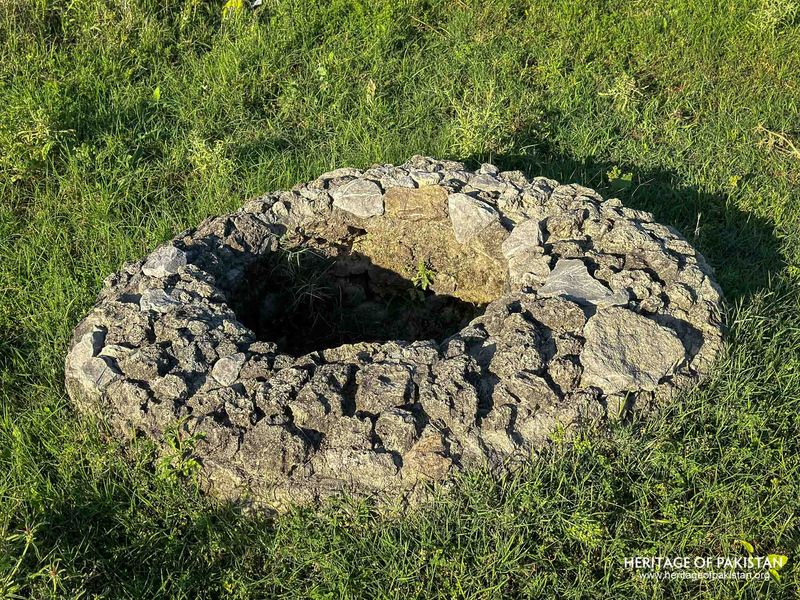
Stone-lined circular feature suggests ancient domestic or structural purpose.
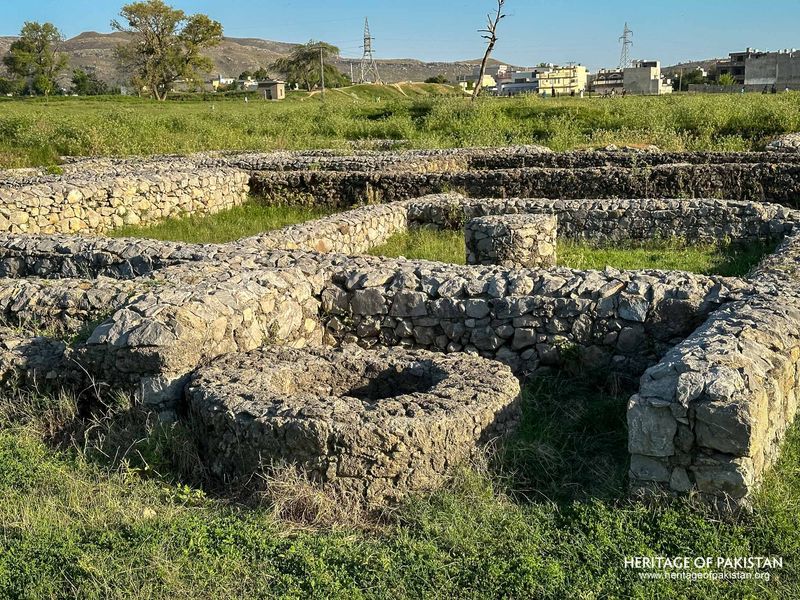
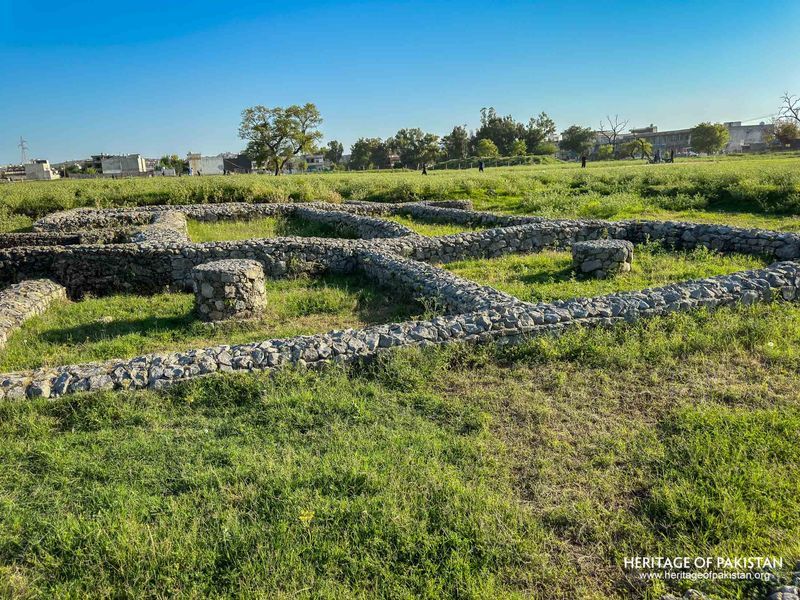
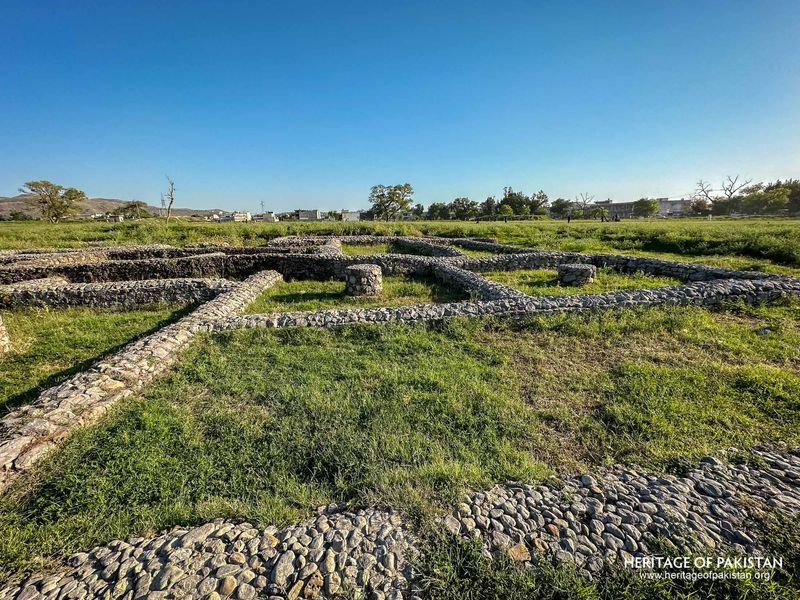
Ancient stone foundations trace street layouts across Bhir Mound's verdant landscape.
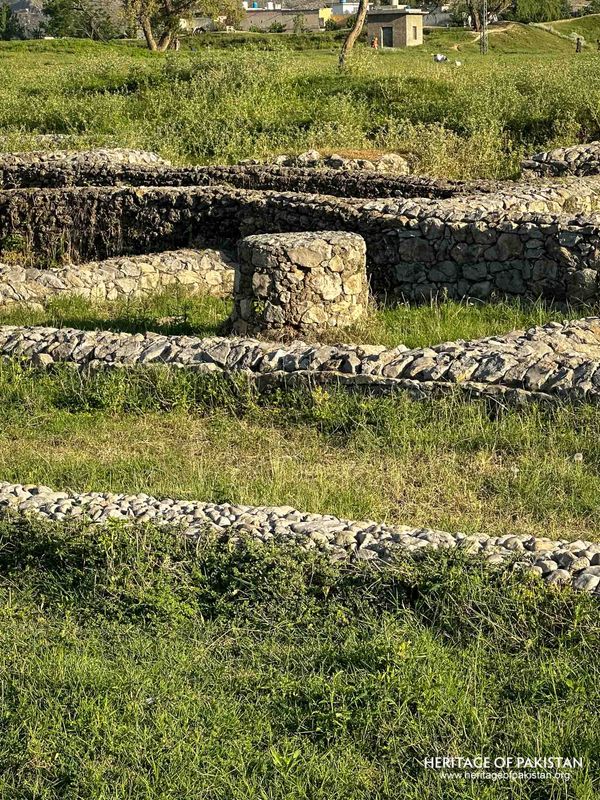
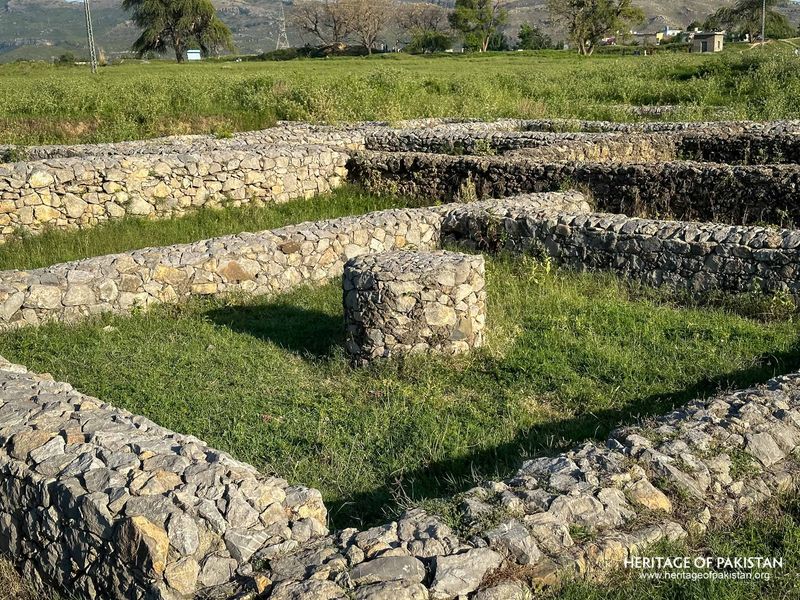
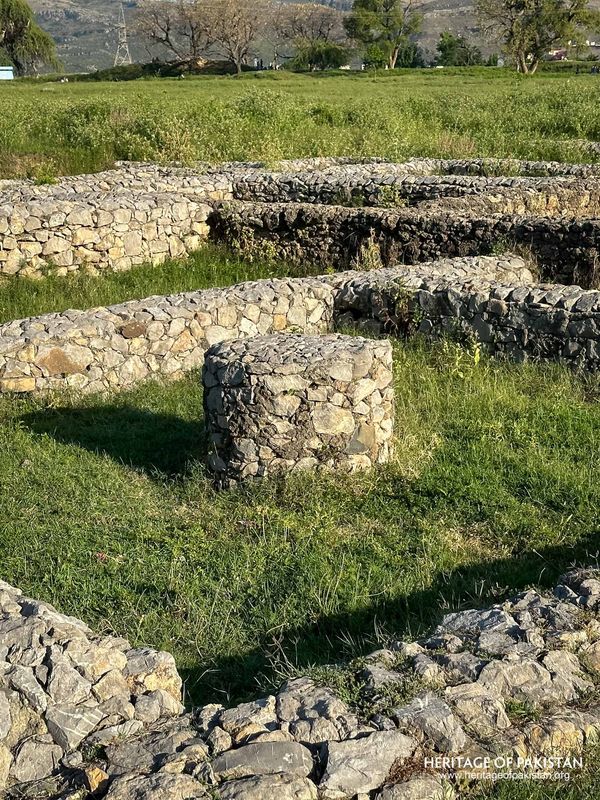
A chambered structure with central support rises from street-level foundations.
A solid stone entrance frames the passage through ancient defensive walls.
Multi-chambered structures reveal complex spatial organization beneath ground.
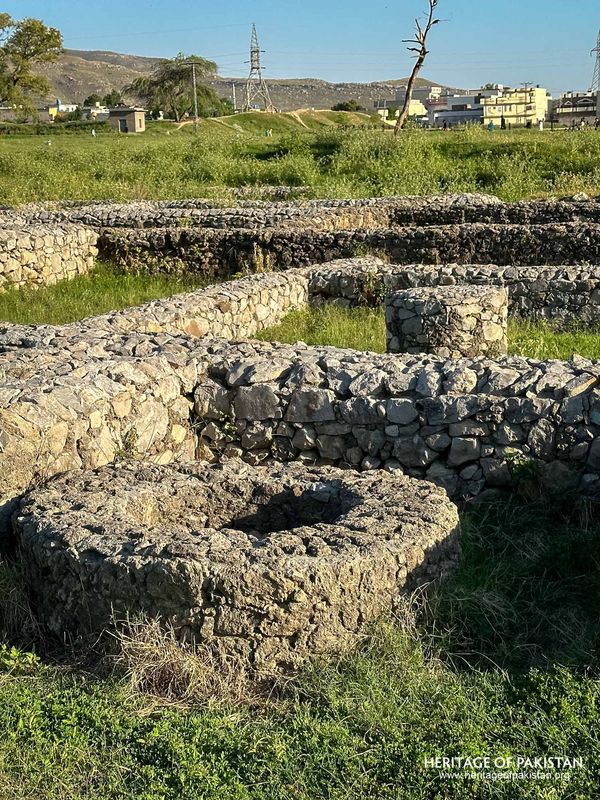
At Bhir Mound, foundations of ancient dwellings anchor the valley landscape.
A weathered circular stone feature marks domestic or utility function.
Excavated stone foundations reveal Bhir Mound's earliest urban settlement layers.
Stone layout at Bhir Mound reveals ancient city streets and dwelling plans.
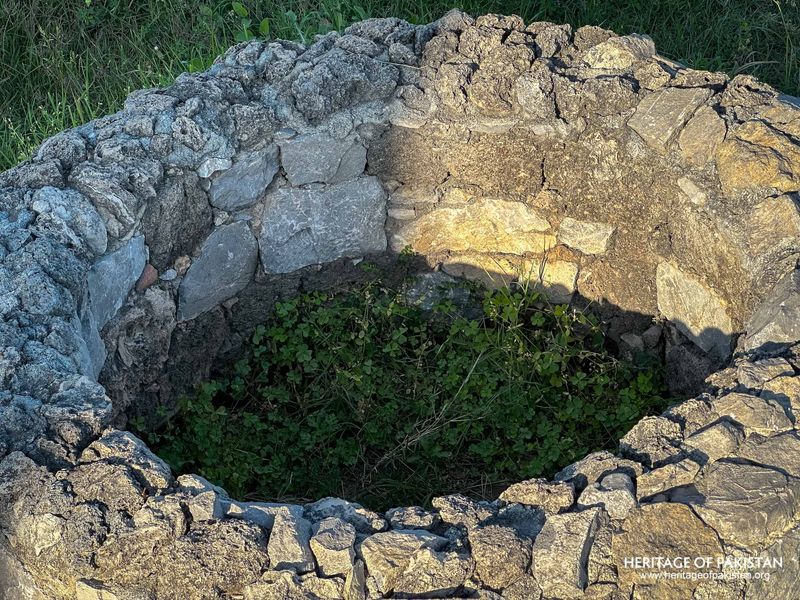
Circular stone well and adjacent walls mark domestic structures at the site.
Successive occupation layers at Bhir Mound span centuries of habitation.
Unearthed walls and wells reveal domestic layouts of ancient city residents.
A deep well with stone lining marks water access within ancient dwellings.
Ancient stone foundations trace the streets and structures of early Taxila.
Curved stone foundations reveal the haphazard layout of the ancient city.
Interpretation panel marks Bhir Mound, earliest urban settlement in Taxila Valley.
Site marker showcases Bhir Mound's stratified cultural layers spanning six centuries.
At Bhir Mound, visible stone structures mark successive settlements across centuries.
Stone-lined circular feature suggests ancient domestic or structural purpose.
Circular stone foundation reveals construction techniques of ancient Bhir Mound settlement.
Stone wall foundations mark urban layout of ancient Taxila's first city.
Ancient stone foundations trace street layouts across Bhir Mound's verdant landscape.
A chambered structure with central support rises from street-level foundations.
A solid stone entrance frames the passage through ancient defensive walls.
A weathered circular stone feature marks domestic or utility function.
Multi-chambered structures reveal complex spatial organization beneath ground.
At Bhir Mound, foundations of ancient dwellings anchor the valley landscape.
Excavated stone foundations reveal Bhir Mound's earliest urban settlement layers.
Stone layout at Bhir Mound reveals ancient city streets and dwelling plans.
Circular stone well and adjacent walls mark domestic structures at the site.
A deep well with stone lining marks water access within ancient dwellings.
Successive occupation layers at Bhir Mound span centuries of habitation.
Unearthed walls and wells reveal domestic layouts of ancient city residents.
Ancient stone foundations trace the streets and structures of early Taxila.
Curved stone foundations reveal the haphazard layout of the ancient city.